
BLOG


Time Management Tools You Need
Introduction to Time Management Tools
Using the right tools can significantly enhance your time management skills. Here are some must-have tools.
Recommended Time Management Tools
- Trello: For project management and task tracking.
- Google Calendar: For scheduling and reminders.
- Pomodoro Timer: For focused work sessions.
- Evernote: For note-taking and organization.
Building a Professional Network
The Value of Networking
Networking can open doors to new opportunities. Here’s how to build a professional network.
Tips for Effective Networking
- Attend Events: Participate in industry conferences and seminars.
- Utilize Social Media: Connect with professionals on platforms like LinkedIn.
- Follow Up: Maintain relationships by checking in regularly.
- Offer Help: Be willing to assist others in your network.
Setting Achievable Goals

Introduction to Goal Setting
Setting goals is essential for motivation and direction. Here’s how to set achievable goals.
Steps to Set Achievable Goals
- Define Your Goals: Be specific about what you want to achieve.
- Make Them Measurable: Set criteria for measuring progress.
- Set a Timeline: Establish a deadline for your goals.
- Stay Flexible: Be open to adjusting your goals as needed.
Effective Communication in the Workplace

Why Communication Matters
Effective communication is vital for teamwork and success. Here are essential elements to consider.
Key Elements of Effective Communication
- Clarity: Be clear and concise in your messages.
- Active Listening: Pay attention and respond appropriately.
- Feedback: Provide constructive feedback regularly.
- Non-Verbal Cues: Be aware of body language and tone.
The Importance of Work-Life Balance

Understanding Work-Life Balance
Work-life balance is about creating a healthy separation between work and personal life. Here’s how to achieve it.
Tips for Achieving Balance
- Set Boundaries: Define work hours and stick to them.
- Make Time for Yourself: Schedule personal activities.
- Communicate: Discuss your needs with your employer.
- Practice Self-Care: Prioritize your mental and physical health.
Maximizing Your Time Management Skills

Introduction
Time management is crucial for achieving goals and maintaining a balanced life. Here are some strategies to help you manage your time effectively.
Strategies for Effective Time Management
- Set Clear Goals: Define what you want to achieve.
- Prioritize Tasks: Use tools like the Eisenhower Matrix.
- Use a Planner: Keep track of deadlines and appointments.
- Limit Distractions: Identify and minimize interruptions.
- Review Regularly: Assess your progress and adjust as needed.
Hello world!
Welcome to WordPress. This is your first post. Edit or delete it, then start writing!
Prediction for Hot Runner Technology
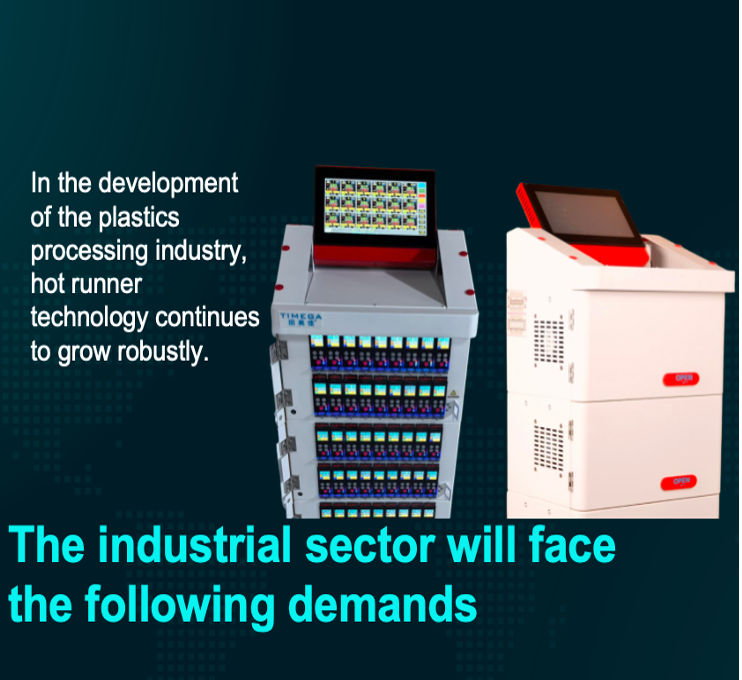
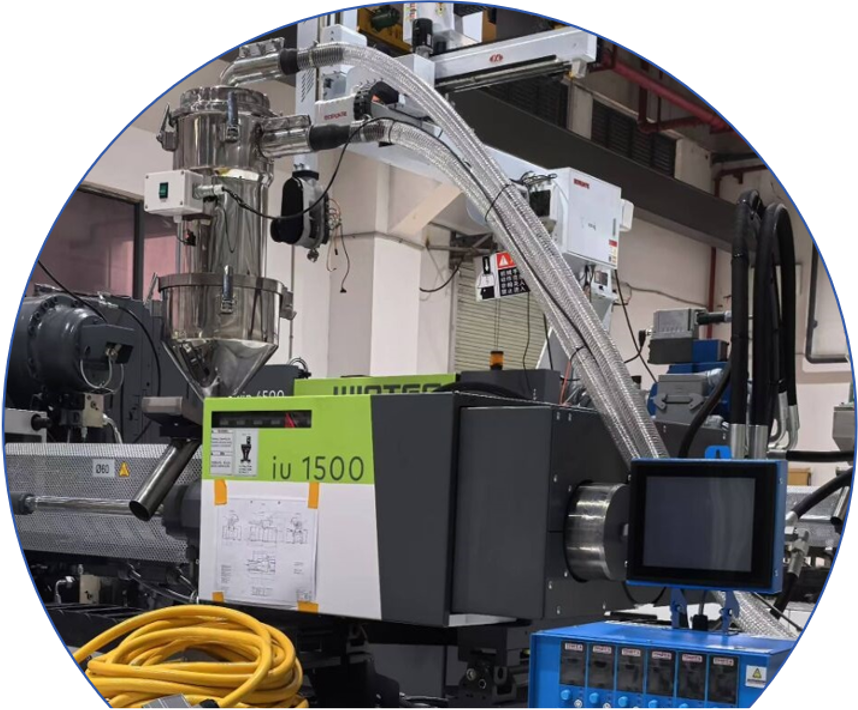
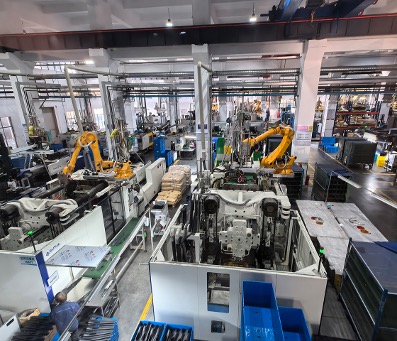
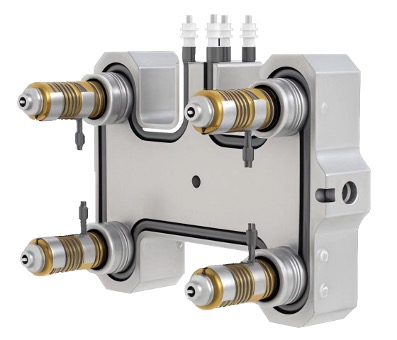
In the development of the plastics processing industry, hot runner technology continues to grow robustly.
The industrial sector will face the following demands
Customers demand higher expectations for quality
Enhance the potential to eliminate failures in the use of hot runner systems, particularly in new molding processes that incorporate hot runner technology (e.g., decorative panels, gas-assisted injection molding), enabling easier processing of new engineering plastics;
Reduce manufacturing costs by requiring full automation, reliability, shorter lead times, and increased production output.Recent advancements in material technology, heating systems, and automated control are being applied. However, it is insufficient for only specialized companies to address these challenges. The results are evident not only in the quality and reliability of hot runner system components but also in price-performance ratios that increasingly favor effectiveness.
Despite these advancements, hot runner systems remain sensitive equipment requiring skilled operation and maintenance. They have inherent limitations and drawbacks. Hot runner technology is continually evolving to mitigate these shortcomings.
Enhance the potential to eliminate failures in the use of hot runner systems, particularly in new molding processes that incorporate hot runner technology (e.g., decorative panels, gas-assisted injection molding), enabling easier processing of new engineering plastics;
Reduce manufacturing costs by requiring full automation, reliability, shorter lead times, and increased production output.Recent advancements in material technology, heating systems, and automated control are being applied. However, it is insufficient for only specialized companies to address these challenges. The results are evident not only in the quality and reliability of hot runner system components but also in price-performance ratios that increasingly favor effectiveness.
Despite these advancements, hot runner systems remain sensitive equipment requiring skilled operation and maintenance. They have inherent limitations and drawbacks. Hot runner technology is continually evolving to mitigate these shortcomings.
Key Development Areas for Hot Runner Systems
Faced with industry demands, the following advancements are critical:
Leak prevention in external heating systems: A method involves screw-threaded connections between nozzles and runner plates.
230V heating systems to minimize effects on melt temperature: Improved microprocessor-controlled regulators with optimized self-regulation have been integrated into injection molding machine control systems. An alternative approach involves using heat pipes to balance temperature differences or employing fluid-filled pipes.
New materials with enhanced thermal conductivity and high mechanical strength at high temperatures: These reduce temperature gradients during high-temperature nozzle operations and enable processing of wear-resistant and corrosion-resistant plastics. The use of sintered molybdenum has shown notable improvements.
New thermal and thermal-chemical treatments: These improve wear resistance of nozzles at high temperatures. Innovations like ion implantation for sintered molybdenum or silicon carbide coatings on beryllium copper parts have been introduced.
Eliminating melt retention in runner plate channels: Solutions include dividing runner plates into sections, machining channels, and reassembling via diffusion welding. Large-radius tubular runner plates can also reduce melt stagnation.
Miniaturizing nozzles: Micro-nozzles now require miniature heating elements. For instance, 10mm-diameter nozzles operating at 230V are already being produced by certain manufacturers.
Reducing energy consumption and thermal loss in external heating systems: New materials like titanium alloys and reflective aluminum foil insulation are employed. In some cases, redesigning runner plate concepts is necessary to further minimize energy radiation.
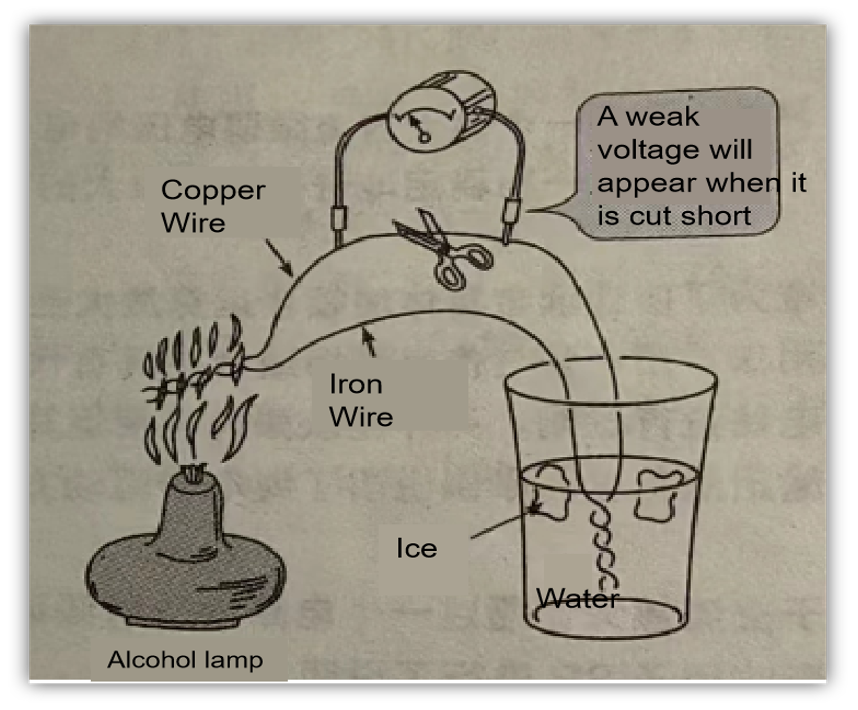
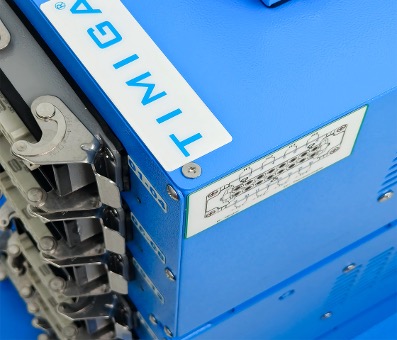
Standardization of heater and thermocouple connection systems: Examples include plug-and-socket designs allowing systems from one manufacturer to connect to control boxes produced by another.
Simplifying installation and removal of hot runner system molds: Significant improvements are needed here. Runner plates with threaded nozzles form integrated units, especially if they can be removed as a single assembly along with cables from the mold.
Wider use of 3D computing methods: Spatial simulation of melt behavior during flow enables better design of complex cavities within molds.
Adoption of CAD samples and selection programs for hot runner components: These tools aid in optimizing choices for nozzles, runners, and gates.
Conclusion
Users are deepening their engagement with complex technical challenges and establishing closed-loop cooperation mechanisms with hot runner system manufacturers. Collaboration with experts, combined with computer-aided design verification, reduces costs and defects in the development of complex molds. This synergy drives innovation while addressing the industry’s evolving demands.
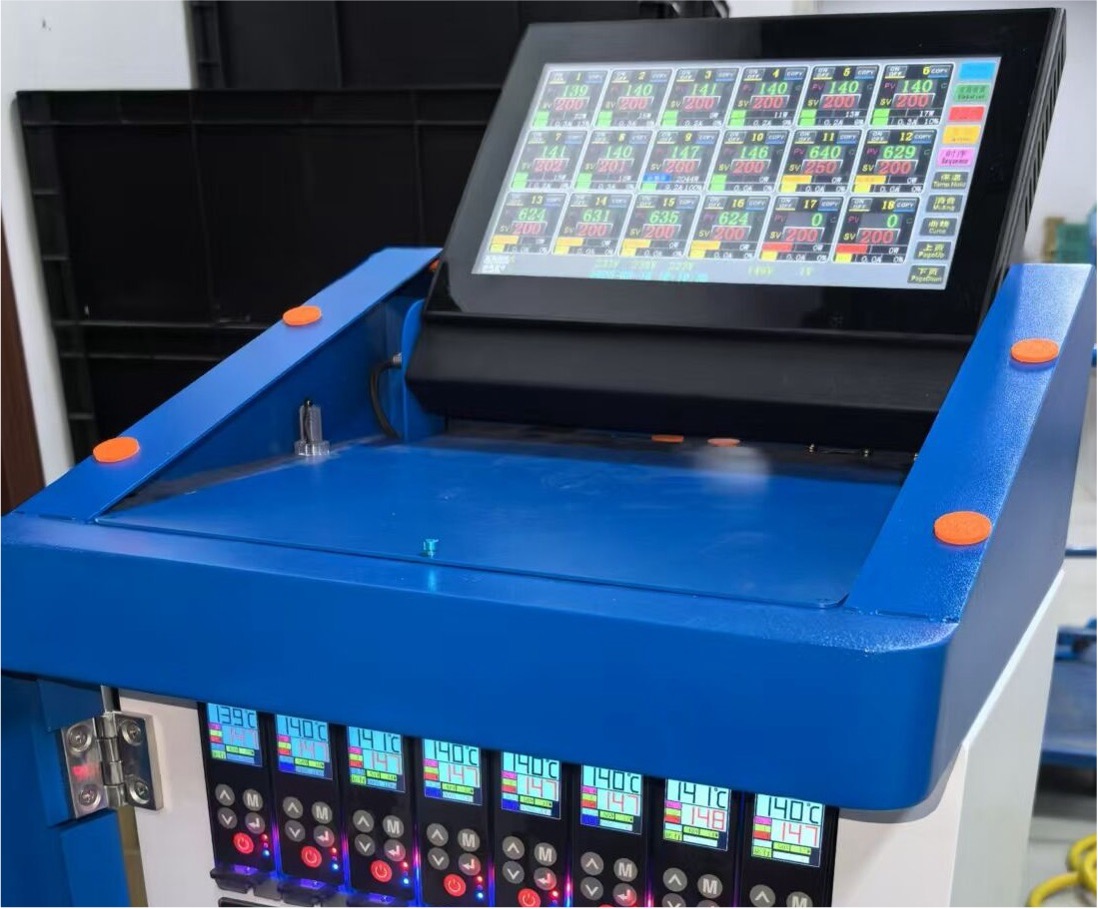
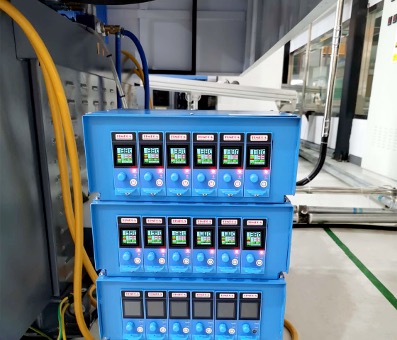
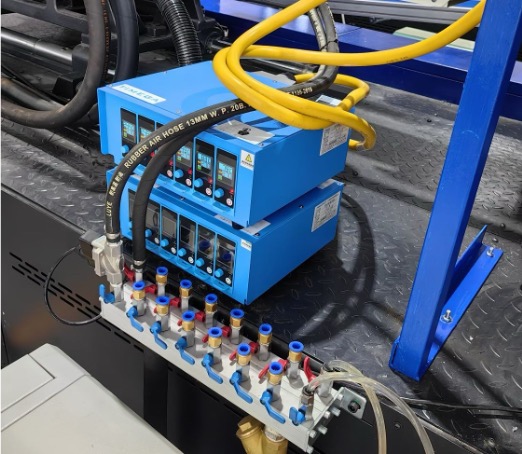
Functions of Hot Runner Temperature Controller
Primary role of a hot runner temperature controller
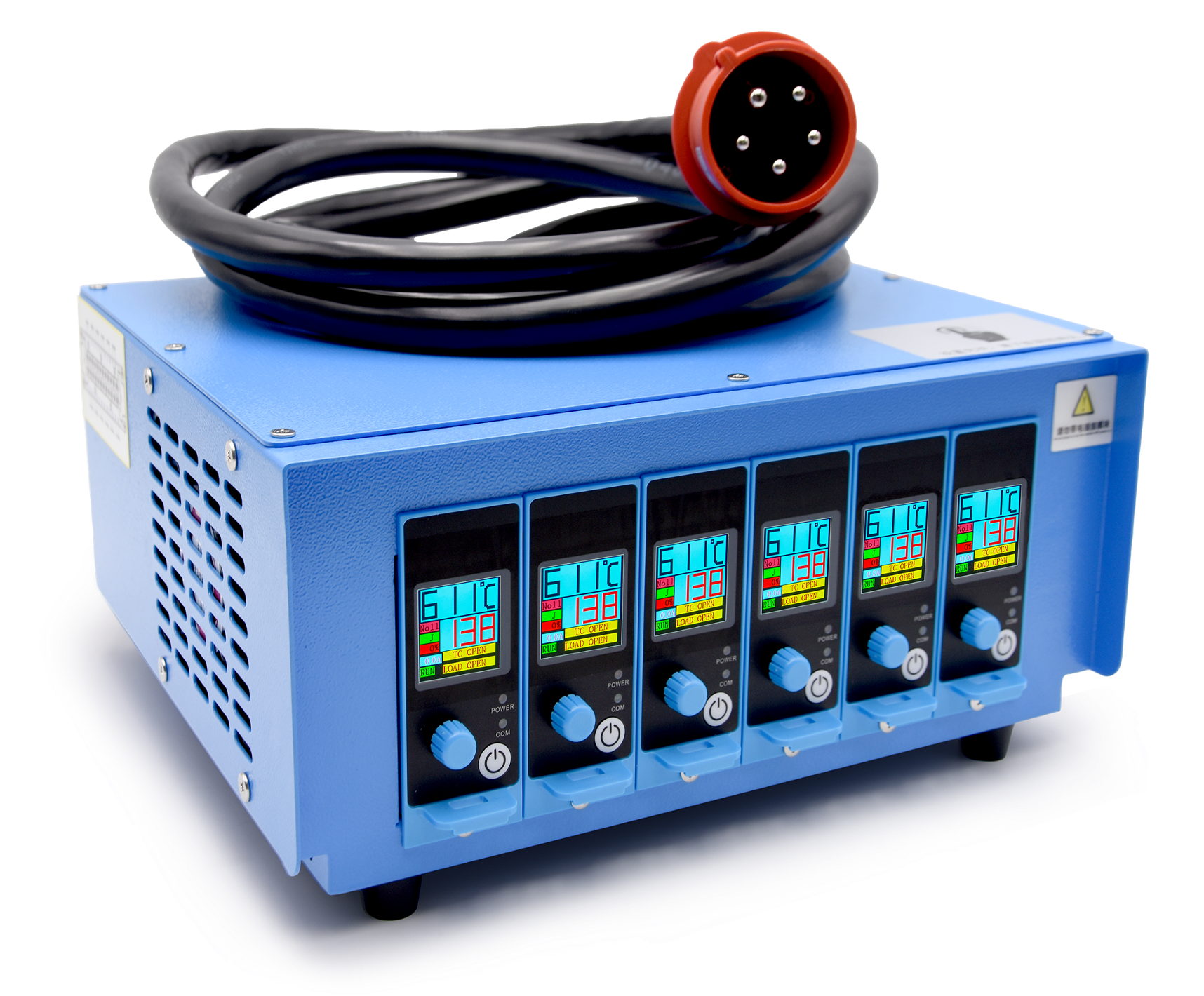
Regulate and stabilize the temperature of the hot runner system, ensuring it remains at the set temperature. Only with a stable temperature can the injection-molded products maintain consistent quality.
First, let’s discuss the common issues encountered during the use of a hot runner temperature controller:
Input Power Supply Failure
Most hot runner temperature controllers operate on a three-phase four-wire 380V power supply, which requires a neutral wire. In practice, many users encounter problems such as missing neutral wires, broken neutral lines, or incorrect wiring between live and neutral wires. In such cases, the internal temperature control unit of the controller may fail to receive a stable AC 220V power supply. If the actual voltage exceeds AC 220V, the internal control unit may be damaged. Therefore, the temperature controller must be able to withstand 380V voltage and provide an alarm alert when such a fault occurs.
Heater Short-Circuit Fault
Short-circuit faults frequently occur during the operation of a hot runner temperature controller, mainly due to heater aging or damaged insulation causing wire-to-wire shorts. When a short circuit happens, the circuit experiences a significant current surge. The temperature controller must be able to withstand this surge without sustaining damage.
Incorrect Connection of Thermocouple and Heater
Due to variations in the heavy-duty plug configurations used by different hot runner system manufacturers, users often face mismatches between the temperature controller’s output and the hot runner system’s input. If the connection is made without verifying compatibility, the temperature controller may burn out the thermocouple. To prevent this, the temperature controller must have an automatic identification function to distinguish between heaters and thermocouples. If a misconnection is detected, the controller should trigger protection mechanisms to prevent thermocouple damage.
Conclusion
To address the three faults mentioned above, a hot runner temperature controller must have the following three essential functions:- 380V Overvoltage Protection
- Heater Short-Circuit Protection
- Thermocouple and Heater Misconnection Detection