
BLOG

What is a hot runner system?

0103

The hot runner technology was introduced into the plastics industry more than 50 years ago. It has revolutionized the processing capabilities of injection molding by improving the quality of molded parts, enhancing operational efficiency, reducing waste, and saving costs. The main advantages of hot runner technology:

  • Provide high-quality parts for various applications.
  • Prevent overfilling or under-filling of parts.
  • No sink marks or flash formation on the mold components.
  • Improve production efficiency.
  • Reduce resin waste.
  • Shorten the cycle time.
  • Offer flexible design and provide customized solutions.

How does a hot runner injection molding system work?

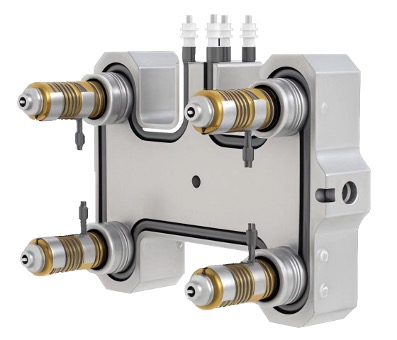
Unlike the gate and runner system used in a cold runner system, the hot runner injects the plastic directly into the cavity. One of the greatest advantages of the hot runner system is that the plastic in the runner never solidifies. This reduces the cycle time and allows for faster processing. Another advantage of this system is the reduction of plastic waste, as the material does not harden until the mold is filled. Since there is no gate system, the amount of trimming work required to make the surface of the final product smooth is greatly reduced. The hot runner operates through an additional runner plate, which is fixed to the mold assembly.
How does a hot runner controller work?

What is a hot runner temperature controller?

231201

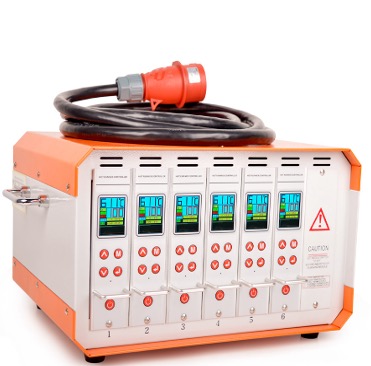
A hot runner controller is a specialized temperature controller that maintains dedicated injection molding components at the design temperature to ensure continuous flow of the mold material. This helps in producing the most consistent products. As one of the essential accessories of the hot runner system, the hot runner controller is interdependent with the hot runner system but relatively independent. Its accuracy and stability significantly impact the hot runner system, while the hot runner system also influences the hot runner controller's accuracy, stability, and service life.

Applications

  • Appliances

  • Automotive

  • Medical devices

  • Packaging

  • Electronics

Types of Hot Runner Controllers Widely Used in the Market

  • HMI-based hot runner controllers

  • Standard plug-in hot runner controllers

  • One card control two zones controllers

Components of a Hot Runner Controller

  • Control module

  • Mainframe

  • Connectors and cables

How Does a Hot Runner Controller Work?

  1. Limit Control: Establishes set points that, when reached, send a signal from the hot runner controller to stop or start a process variable.
  2. Linear Control: Matches a variable input signal with a correspondingly variable control signal.
  3. PID Control: Monitors the error between the desired value and the actual value.
  4. Fuzzy Logic: A hot runner temperature control technique where variables can have imprecise values (e.g., partial truth) rather than binary states (completely true or completely false).
  5. Advanced or Non-linear Controls: Such as neural networking, adaptive gain, or emerging algorithms.

Hot runner systems provide superior injection molding results. The brains of these systems are the temperature controllers, which allow the system to operate optimally with minimal waste and improved quality.